A sensational wreck found in the center of Stockholm

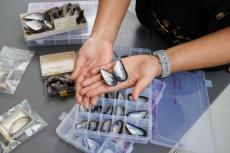
An excavator was working the expansion of Strömkajen below the Grand Hotel when the operator realized that he had some artiefacts in the bucket. Marine archaeologists from the Maritime Museum which were called in were thrilled to discover that it was something so unusual as part of a ship with sewn planking.
This discovery is extremely interesting in view of the discovery site. Here at Blasieholmen, until well into the 1600s, were long navy shipyard and it was actually here that the Vasa was built,
Hans-Lennart Ohlsson, President of the Maritime Museum.
Hans-Lennart Ohlsson is grateful the construction workers immediately contacted the Maritime Museum . The archaeologists went to Blasieholmen without any particular expectations.
"But we soon realised that this find was something out of the ordinary. Stockholm below the surface tend to throw something exciting at you when you least expect it, "said Jim Hansen, senior marine archaeologist on site.
Dating will be performed at the National Museum in Copenhagen with a method called dendrochronology a technique which compares growth rings in the timber with known references to see what year the timber was felled.. The results are expected by the ned of the years but archaeologists are confident that the wreck predates the year 1700.
Held together by wicker
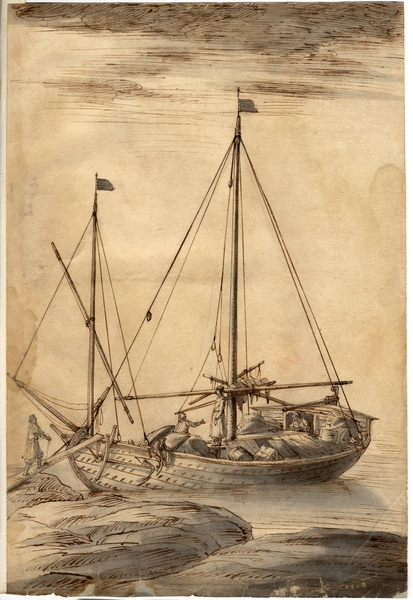
The technique where the hull is held together by wicker has its origin in the eastern part of the Baltic. In Sweden, the technique was used to sew the boats in prehistoric times. In Russia and the Baltics had a tradition of building bigger sewn ship from the 1500s onwards.
Where did it come from?
Jens Lindström, marine archaeologist, can already see a possible scenario on why the ship found at Blasieholmen:
During much of the 1600's Sweden dominated the Baltic Sea and vessels of the eastern type was included in the fleet which had its base here.
Scientists know very little about this ship design and there are very few recovered wreckage of this type and certainly not of the size and proportions that these remains shows. In the 1800's a few planks were recovered in Stockholm, from a similar but probably smaller wreck which dated from the end of the 1600s. However those is in worse condition than those found now even having marks after an axe.
In the following weeks, marine archaeologists will work alongside the construction workers hoping to make additional discoveries.
- Log in to post comments