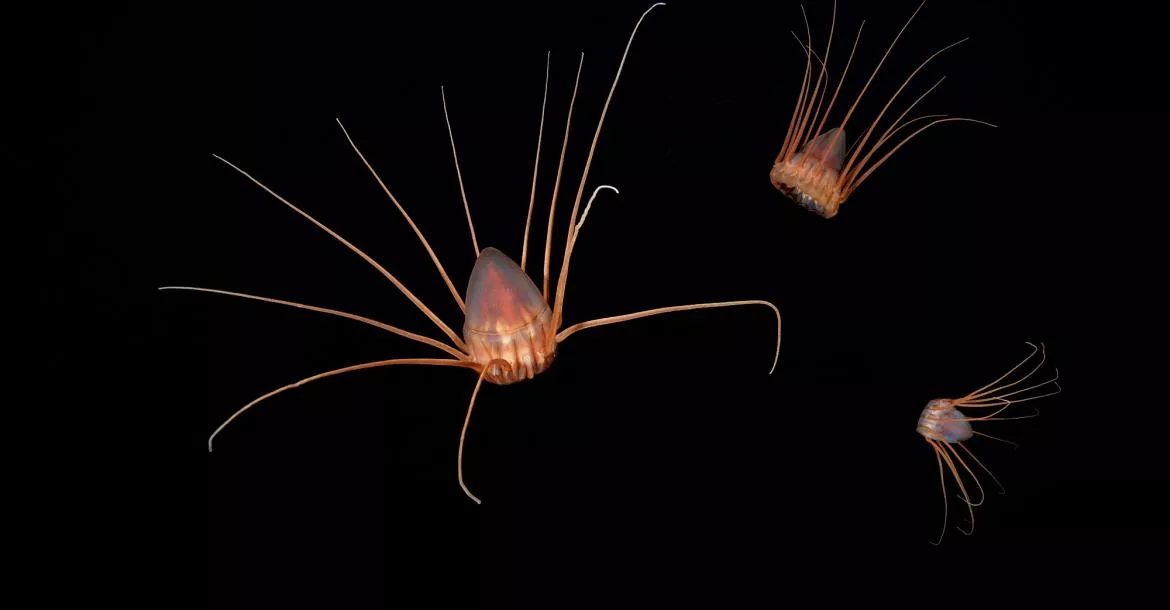
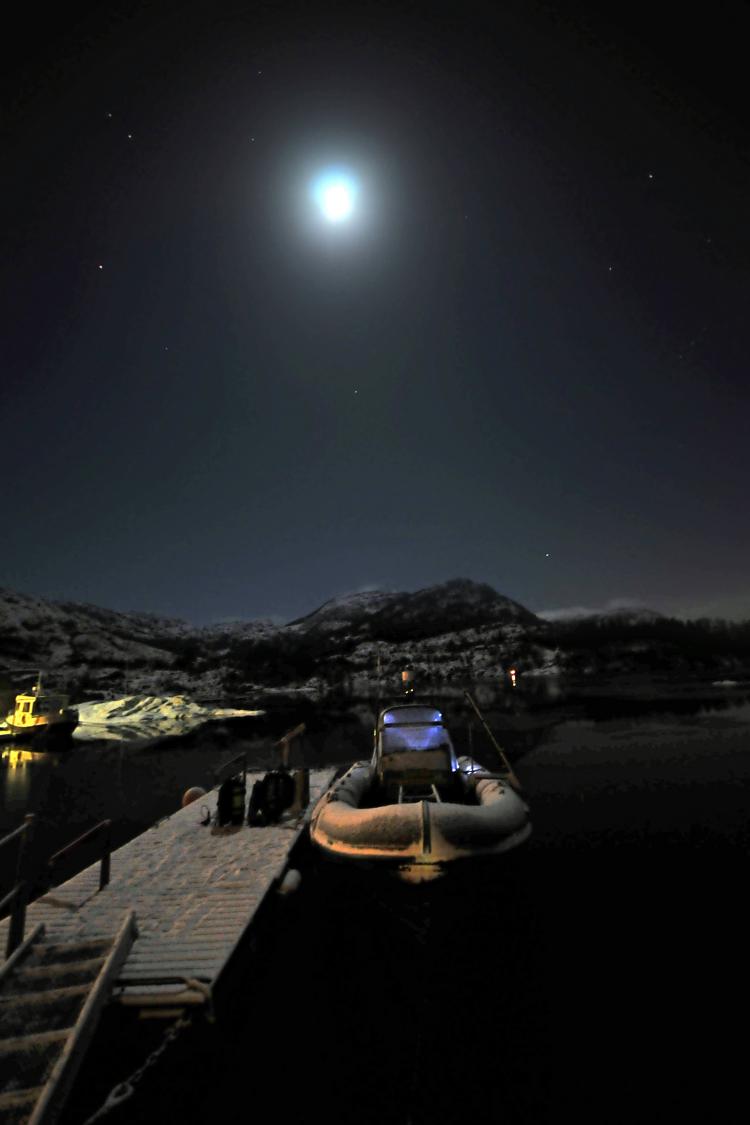
The jet-black rubber RIB was running flat out in the February night. We were sweeping past the Mongstad oil refinery at the Norwegian west-coast, just south of Gulen Dive Resort, and the clock was approaching midnight. Apart from the lights in the distance, the visibility was zero, and we were navigating solely on GPS, chart plotter and radar. The speed of 35 knots produced a howling wind, although the sea was completely calm. There was no moon, which was perfect for what we had in mind—an encounter with the alien of the deep, the crown jelly, Periphylla periphylla.
Contributed by
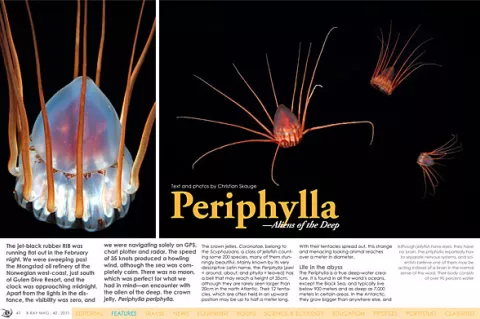
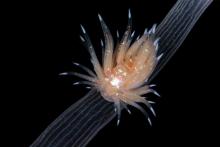
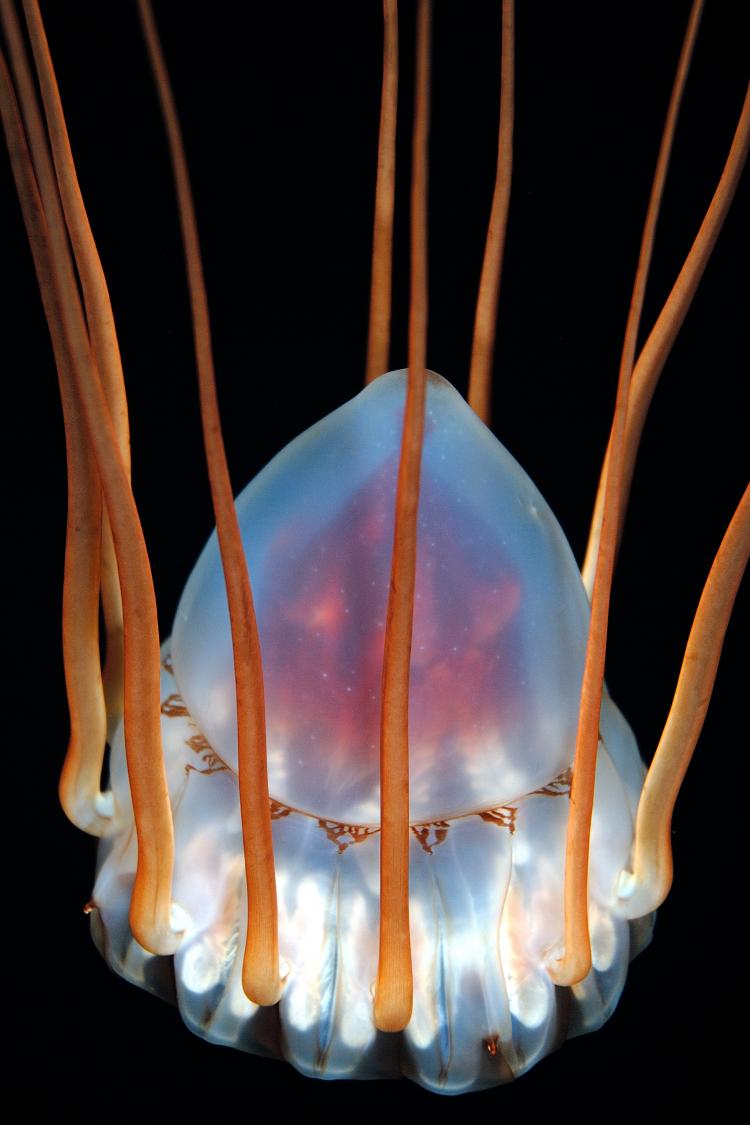
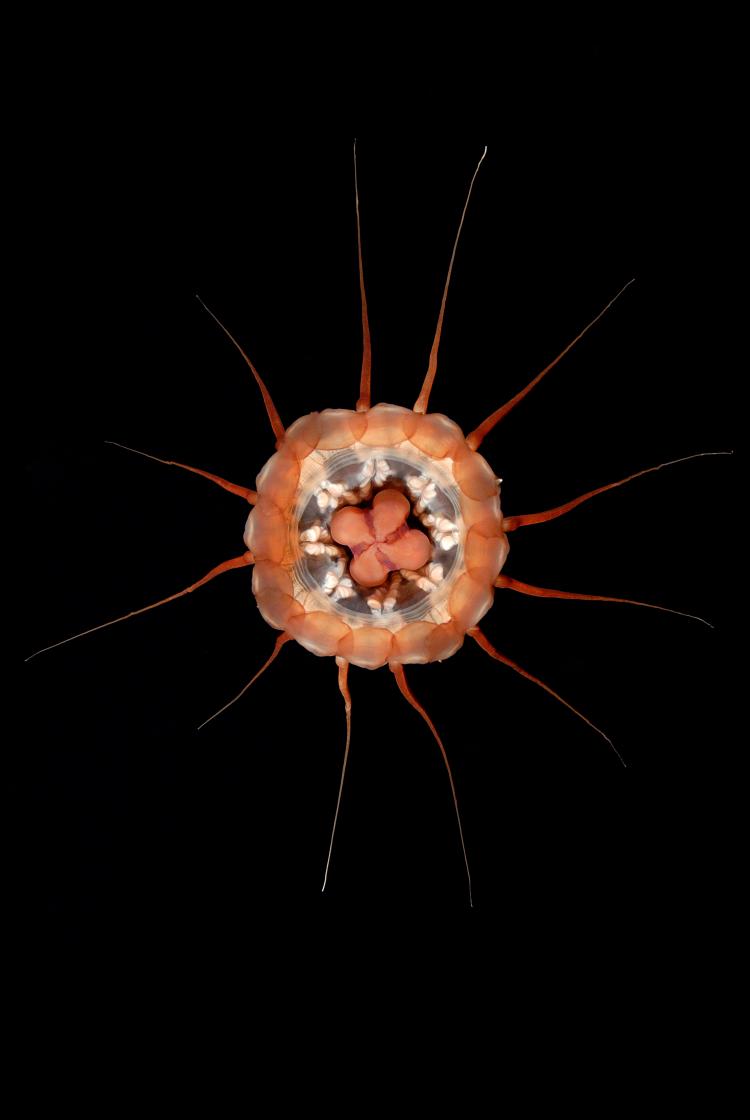
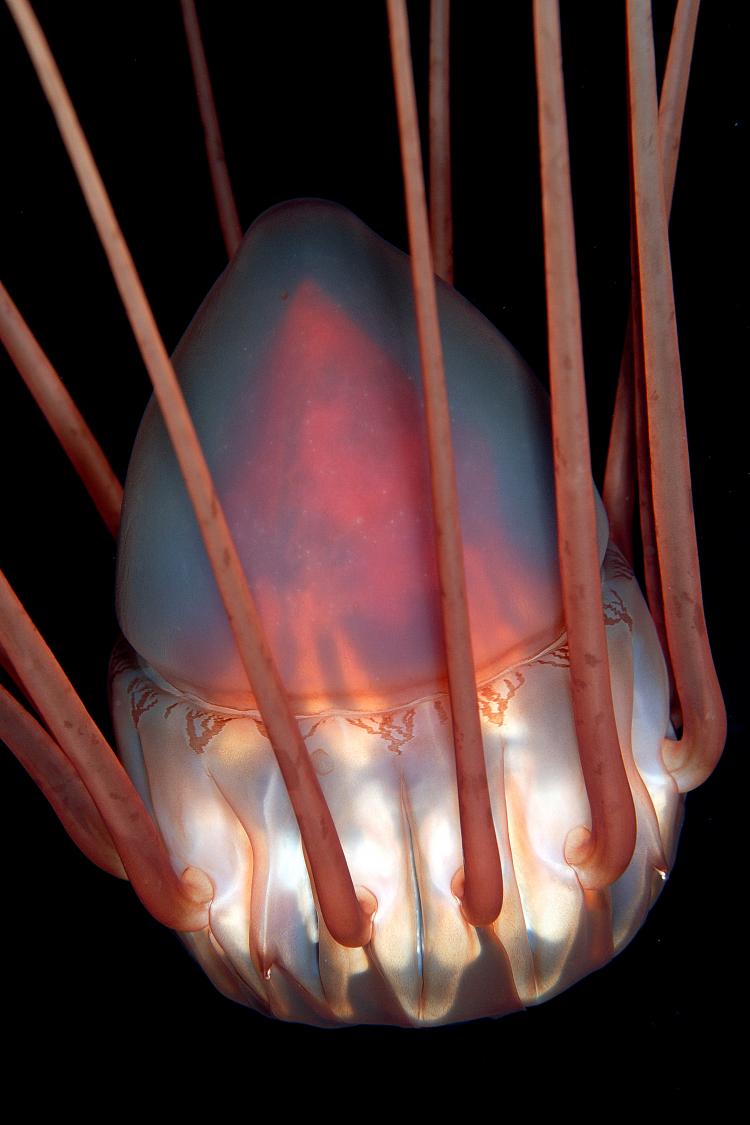
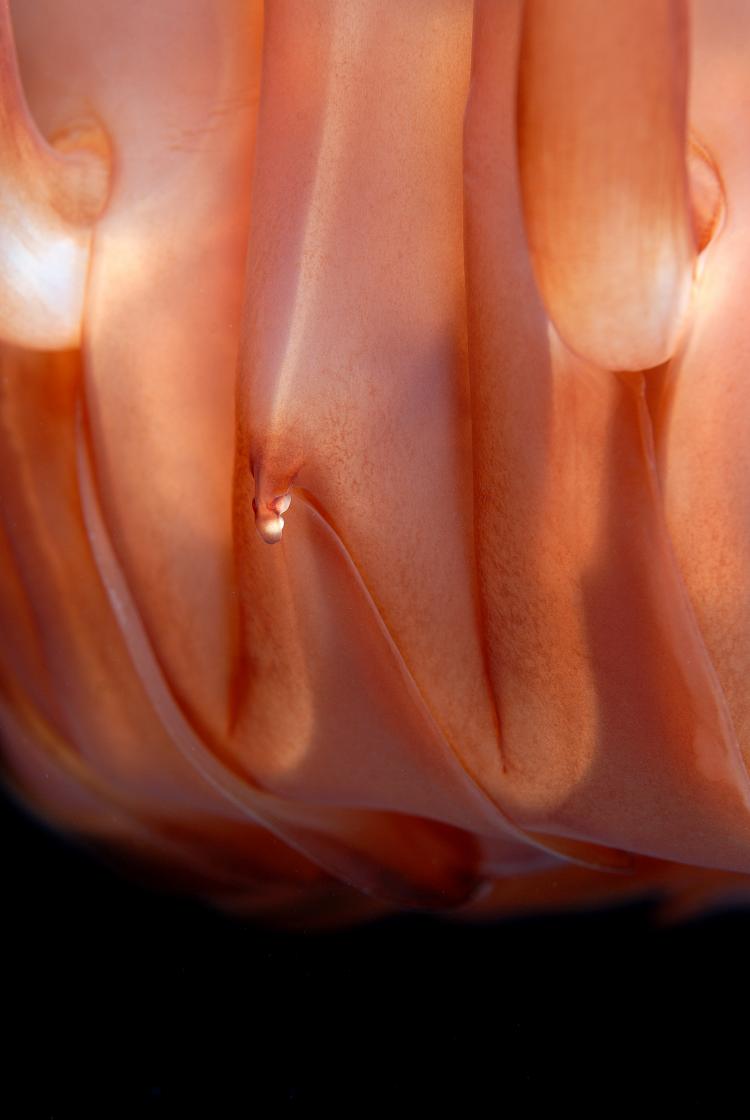
The crown jellies, Coronatae, belong to the Scyphozoans, a class of jellyfish counting some 200 species, many of them stunningly beautiful. Mainly known by its very descriptive Latin name, the Periphylla (peri = around, about; and phylla = leaved) has a bell that may reach a height of 35cm, although they are rarely seen larger than 20cm in the north Atlantic. Their 12 tentacles, which are often held in an upward position may be up to half a meter long. With their tentacles spread out, this strange and menacing looking animal reaches over a meter in diameter.
Life in the abyss
The Periphylla is a true deep-water creature. It is found in all the world’s oceans, except the Black Sea, and typically live below 900 meters and as deep as 7,000 meters in certain areas. In the Antarctic, they grow bigger than anywhere else, and the Periphylla may be the most abundant and widely distributed deep-water jellyfish in the world.
Life in the abyss is one of eternal darkness, scarce food supplies, trouble finding mates—and voracious predators. Many of the deep-water animals have developed bioluminescence in order to overcome some of these challenges, and so too with the Periphylla. Sometimes it can be observed changing colour and almost pulsating with light. It is not known exactly why the Periphylla does this, but many scientists believe the jellies use light to communicate and signal such things as readiness to mate—after all, they have four eyes called rhopalia at the rim of the bell, surely capable of detecting the light. The dark red colour of the bell is said to be masking the light of ingested bioluminescent pray, which might otherwise attract predators.
Like vampires and trolls
So, how deep do we need to venture to catch a glimpse of this stunning deep-water creature? Luckily, the Periphylla has a trait that enables scuba divers to observe and photograph them at dive-able depths—even close to the surface. After the hatching of the eggs, which floats motionless for months in mid-water at a depth determined by a combination of temperature, salinity and water density, the Periphylla develops 12 powerful tentacles and starts a life-long cycle of swimming several hundred meters to shallower water to feed at night, then sinking back into the abyss as soon as day breaks. In that respect, they are like the vampires and trolls of ancient tales—if they see the sun rise, they will die. But this time, it’s true.
Despite being able to produce its own light, the Periphylla is photo-sensitive and will not survive being exposed to sunlight. Even strong moonlight makes them turn around and head for deeper waters, and so do powerful dive torches. Light will break down the brilliant red pigment in the bell and the tentacles, and the jellyfish will perish. The destruction spreads along the two nervous systems the jellyfish possess, also destroying its capability to move properly. In order to observe them during a dive, absolute darkness (apart from dive lights) is a necessity. And you have to be at the right place at the right time.
A rare treat
Although the Periphylla is abundant in the depths of most oceans, there are some special places where they congregate in the millions because the conditions are particularly favourable. One of very few such places on the planet is a fjord called Lurefjorden, just north of Bergen, and this is where we were heading at full throttle through the night. In the winter, the feeding cycle of the Periphylla coincides with mating season, which occurs from November until April. February, being right in the middle, usually offers the highest density of jellyfish—if you dive on a moonless night such as we were.
Lurefjorden is a 400-meter-deep, enclosed fjord with four openings to the ocean. All the openings are nearly closed by thresholds as shallow as 20 meters, permitting very little oceanic water to enter and exit with the tides. In addition, arrow worms, copepods and krill—which make up the bulk of the diet—are abundant in the fjord. The jellyfish also feeds on fish eggs and larvae, and have almost eradicated the once rich population of cod that used to inhabit the fjord back in the 70’s. Today, the Periphylla reigns on top of the food chain with very few predators threatening its existence.
The RIB finally slowed down, and the biting cold and howling wind came to a halt. The night closed in on us, quietly, as we drifted slowly across the surface, several hundred meters from land. The echo sounder showed that we had almost 300 meters of water beneath the keel—a perfect place to scout for the Alien of the Deep.
We geared up in the darkness and checked the cameras, torches, backups and extra backups. The dive was planned to a maximum of 30 meters, without surface markers or lines. We needed to be free in the water, and didn’t want lines tangled up in stinging tentacles. Needless to say, buoyancy was crucial in the pitch-black waters we were about to enter. If one gets too caught up in a particular specimen, one might suddenly find him of herself at a depth of 50 meters or more.
Diving 300 meters above the seafloor
We splashed in, and the slight current immediately grabbed us and pushed us away from the boat. We signalled OK with the torches and slipped beneath the dark surface with a few stars and a keen-eyed dive leader as our only witnesses. It was the moment of truth. Were they here tonight? Would we see many, or just a few?
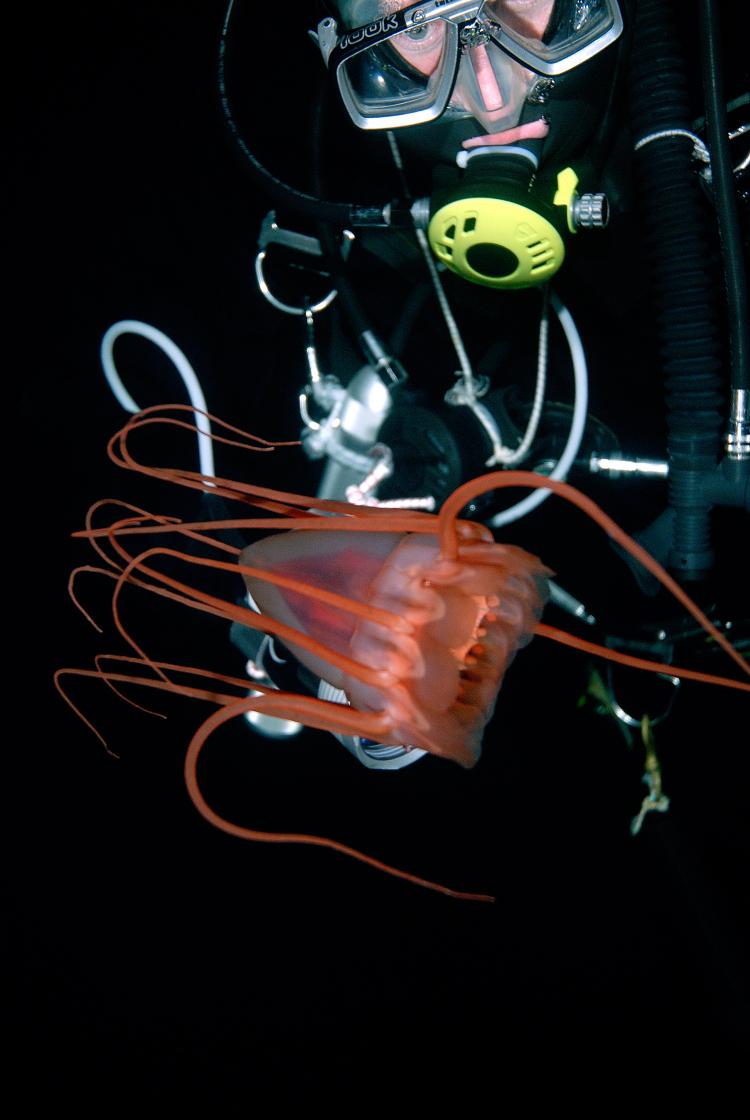
As we slowly descended through the water, our eyes tried to adjust to the immense blackness. Torches painted luminescent arches, as we swiped them back and forth through the water to catch signs of life. The first few meters all we saw was krill, but that was a good sign. Food. At about 12 meters, I spotted the first shapes below us. They were here—and my god, there were lots of them! A few more meters, and suddenly they were everywhere. Most of them were just hanging still with their tentacles spread out, eagerly awaiting their prey. Some of them turned nose down to escape our beams of light, and headed into the abyss below us.
The Periphylla don’t have thin tentacles like normal jellyfish. The appendages are thick and stiff, and more anemone-like than anything else. When you touch them (and with these great numbers you can’t help it) they attach to your gloves or suit just like the tentacles of a large anemone—sticky. Their burn is that of the familiar lions mane jellyfish or worse, but doesn’t last that long.
Because of their relatively small number of tentacles, the Periphylla seemed to be avoiding contact with other individuals, to avoid getting tangled up and losing their precious cutlery. They neatly spread out and occupied about a cubic meter of water each. There they hung, almost motionless, ominously awaiting the arrival of their prey—which, because of the current, was bound to happen sooner rather than later.
Intelligent—or just very adept?
The Periphylla have a highly perfected and almost intelligent way of catching food. Their sensory organs are able to pick up minute vibrations—just like those made when a krill is “running” through the water with all its tiny legs. When the jellyfish senses food is approaching, they sometimes fling their tentacles in the direction of the prey, actively hunting, not just waiting for stuff to drift into their arms. Once contact has been made, the powerful nematocysts (stinging cells) covering their arms will attempt to paralyze the unlucky crustacean—if it’s a big strong one, the Periphylla will send in one or more arms in addition and produce a corkscrew-like motion to aid in capturing dinner. The bigger the contact surface, the more nematocysts will fire. In seconds, the arms holding the prey will swing underneath the jellyfish and into the mouth cavity, only to reappear empty a few moments later. Efficient and deadly, the Periphylla is a fierce predator.
Jellyfish glided by us as we slowly drifted at about 25 meters. At this depth, they seemed to be the most abundant. I looked at the other divers; they often had two or three jellyfish attached to various parts of their gear without even knowing it. In any direction you looked, there were just jellyfish after jellyfish after jellyfish—and it was such a thrill! Eventually, the presence of my camera in my hands dawned on me, and I started taking pictures. The camera struggled to focus in the difficult conditions, but a subtle focus light helped. Manoeuvring close enough to the jellyfish without startling them was a challenge, but we soon got the hang of it. The night water was constantly penetrated by the sharp flashes of underwater strobes going off.
Secrets revealed
Suddenly, I got too close to a jellyfish, and inadvertently touched it with the camera. Its colour immediately changed from deep red to bright white and back again, and then the Periphylla revealed yet another of its secrets: Almost like a squid, the jellyfish spit out a bright blue cloud of slime, turned around and headed for deeper water with powerful contractions of its bell, the arms trailing. Baffled, it took me a few seconds to realize what had just happened, and had I been a predator with no torch, the jelly would have escaped to safety thanks to this defence mechanism.
Although it seemed that we were in a different dimension, time passed just as quickly with the jellyfish as on the surface—in fact, even more quickly. After an hour, I slowly made my way back to the surface. My computer turned off the depth meter when I got close to the surface, but I could not yet see it or sense it at all. The darkness was just so impenetrable that I was not sure if I had actually surfaced before I took my regulator out of my mouth and breathed fresh air. The boat was nowhere to be seen, probably picking up other divers elsewhere. We lied on our backs gazing at the faint stars above us, knowing we had seen something very few people have ever witnessed. When they boat crew finally saw our strobes and picked us up, it turned out that we had drifted about a kilometre.
Unforgettable
The encounter with the Periphylla is one of those dives people never forget. Just like seeing a manta or whale shark for the first time, the Periphylla is an awe-inspiring, out-of-this-world experience. The jellyfish are true aliens to our world, even though they have been on this planet far longer than we have. Some scientists believe the Scyphozoa to be about 600 million years old. Even though the Periphylla can live to be 30 years old, that’s a lot of generations.
When we headed back to the resort, the freezing cold and howling winds again got the better of us. But this time, it didn’t matter—for the jellyfish had warmed our hearts. ■
Christian Skauge is an award-winning underwater photographer and dive writer based in Oslo, Norway. For more information or to order prints, visit: www.scubapixel.com