Tunicates may hold key in Alzheimer's research

Tunicates share a protein with humans that leads to the development of the plaques associated with Alzheimer's disease.
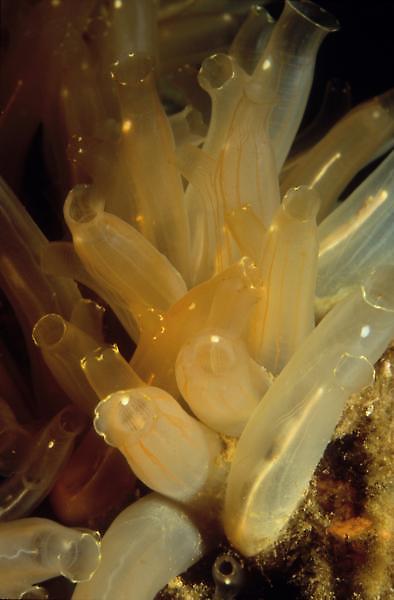
According to San Diego biology professor Bob Zeller, the invertebrate that grows on boat hulls and dock pilings shares a protein with humans leads to the development of plaques, the brain irregularities that are linked to Alzheimer's disease. According to Zeller, his lab has been able to produce plaques in sea squirts in a mere 24 hours.
"We've now got a new animal model for looking at the development of plaques as well as effects on simple behaviors," he said. One of Zeller’s graduate students has tested an experimental drug, which dramatically reduced the plaques in sea squirt larvae.
Testing drugs in a living organism is always superior to testing them on cell cultures in a petri dish, although any Alzheimer's drug would ultimately have to be tested on humans.
- Log in to post comments